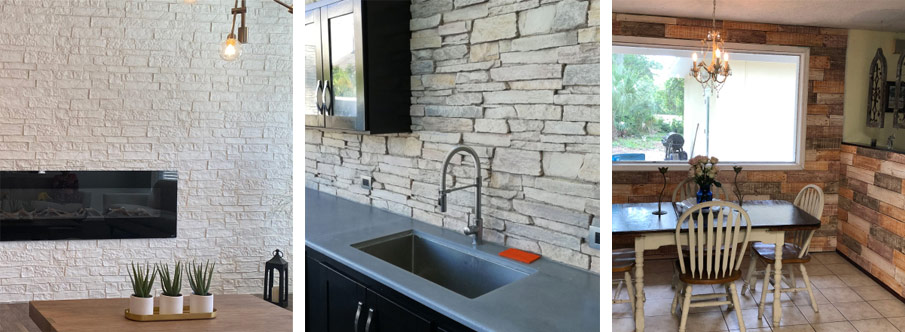
As a main focal point and a popular gathering place, your fireplace is an integral part of your home’s interior design. Doesn’t it deserve to look its best?
Creating a stacked stone fireplace is a great way to update your décor while also increasing your home value. Plus, it can be a fun weekend DIY project!
Here’s what you need to know in terms of the materials to use, safety considerations and installation tips.
What Kind of Stacked Stone Should You Use?
To create a stacked stone fireplace design, you have two main material options to choose from: natural stone or faux stone panels.
| Stone Type | Pros | Cons |
| Real/Natural Stone |
|
|
| Faux Stone Panels |
|
|
Real/Natural Stone
When it comes to creating a stacked stone fireplace, using real stone is a guaranteed way of achieving the most natural look possible. In addition to looks, there are several other benefits of choosing stone for your fireplace design. Natural stone is:
- Fireproof
- Durable
- Able to retain heat
- A contributor to increased home value
What many people don’t know is that some products labeled as “real” stone are often made from concrete. Even though natural stone products — made from actual stone materials — are a great choice for some, they come with a few drawbacks that may be too much for the average DIYer:
- Difficult to cut without specialized tools
- Too heavy for drywall installation
- Tough to install and may require a skilled mason
- Materials and installation can have high costs
- Difficult to remove
Faux Stone
If any of the drawbacks of natural stone are deal breakers for you, faux stone panels are a good alternative.
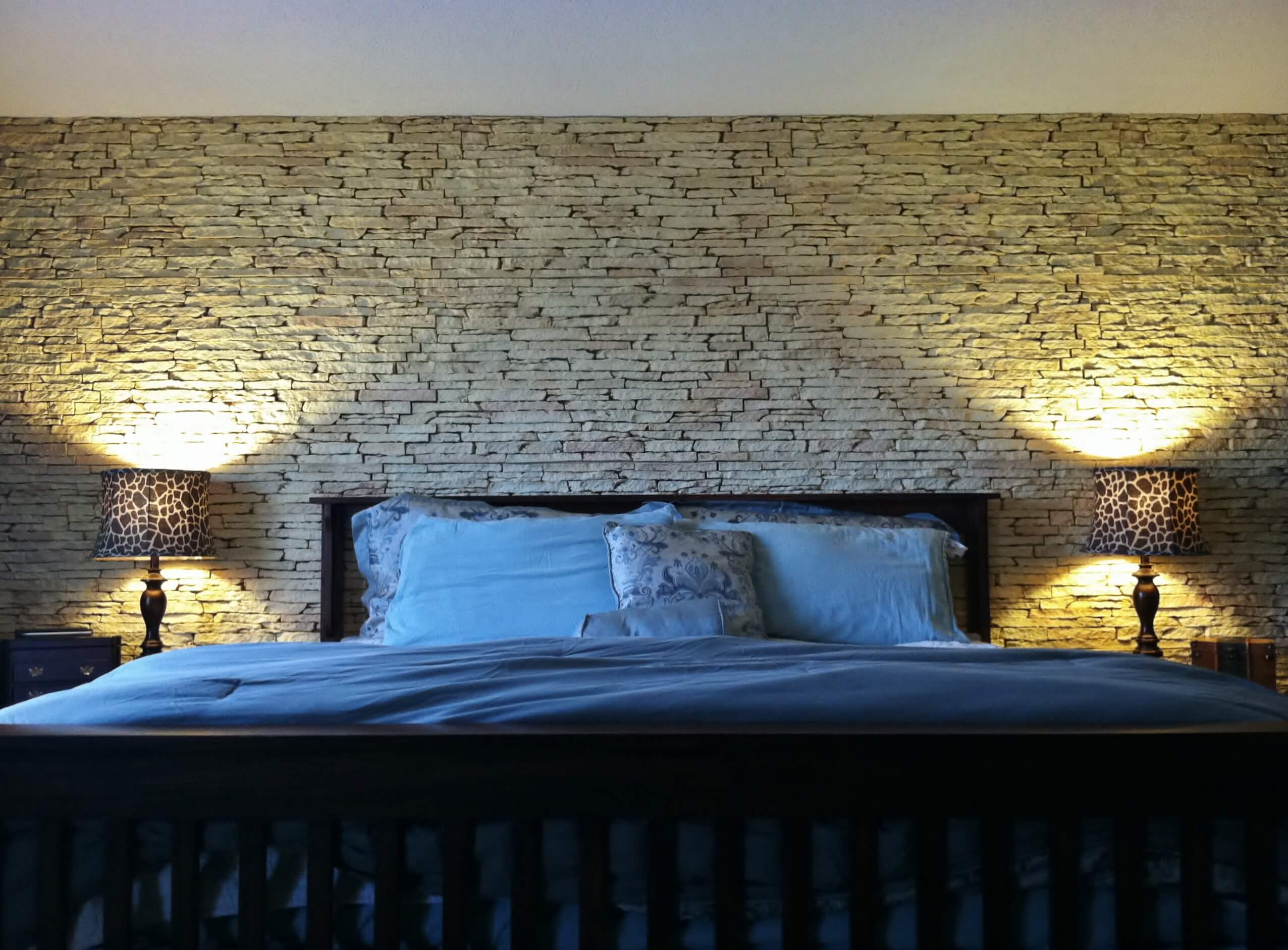
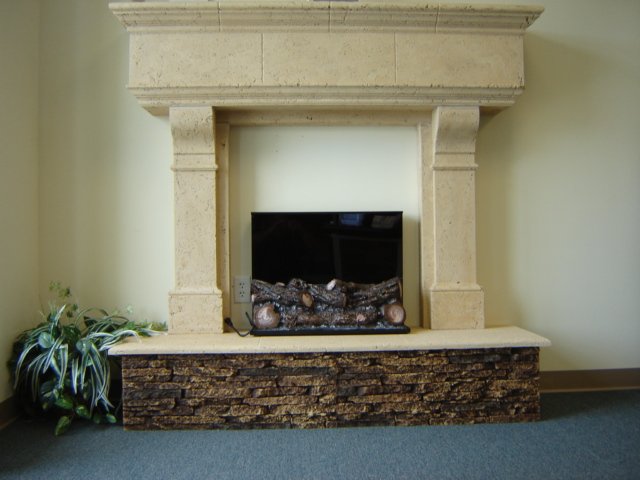
Faux stone is made from lightweight materials and comes in a variety of different styles and colors, making it easy to work with and versatile. Most of the time, it’s even indistinguishable from the real thing and can give your fireplace the look of hand-laid stone.
Compared to natural stone, faux stone panels are:
- More affordable — often 25% more cost effective than natural stone
- Easier to cut and install
- Light-weight and can be installed over drywall
- Long-lasting and durable
- Available in various shapes, sizes and colors
Faux stone panels are also easy to install around corners and can be cut any way to fit your fireplace. Texture Plus faux wall panels are 2’ x 4’, making them easy to handle and ship!
However, as is the case with natural stone, faux stone panels have certain drawbacks. The list of cons includes:
- Aren’t as long-lasting or durable as real stone
- Aren’t naturally fireproof and must be treated
- Prone to chemical and moisture damage
- Can fall off if not attached properly
Stacked Stone Fireplace Cost
One of the biggest differences between natural stone and faux stone wall panels is expense. To help you better plan the budget for your stacked stone fireplace, let’s take a closer look at how the costs break down.
Materials Cost
Natural stone is one of the most expensive housing materials to work with, with prices ranging from $35 to $50 per square foot.
Faux stone wall panels come with a much lower price tag, as you’ll typically pay between $8 and $12.50 per square foot — less than half the price of the real thing.
Labor Cost
Stone laying is an intricate process. So unless you have masonry experience, it’s always best to hire a professional to guarantee proper installation. This type of work is extremely time and labor intensive, and you can expect to pay an additional $20 to $30 per square foot for this service.
Stone faux wall panels come with all the aesthetic benefits of real stone and none of the installation costs, as no mason work is needed. In fact, installation is simple enough that you can save yourself some money by installing the panels yourself without the help of a professional.
Total Cost
When you take both the cost of materials and labor into account, the most budget-conscious choice is faux stone wall panels. When opting for this DIY-friendly option, the only expense you’ll need to account for is the cost of the panels themselves (typically $8–$12.50 per square foot).
If you choose to use real stone, you’ll most likely need to include labor costs while calculating the total expense. With prices for stone coming in between $35 and $50 per square foot and labor an additional $20–$30 per square foot, you could pay anywhere between $55 and $80 per square foot to complete your fireplace.
Do You Need to Hire a Contractor?
If you’re considering adding a stacked stone fireplace to your home, retail or office space as part of a renovation or new build, this is the question that’s most likely top-of-mind. The answer depends on a few different factors, namely your expertise, budget and the type of materials you plan on using.
Hire a Contractor if…
You have your heart set on a real stone fireplace. As we mentioned previously, opting for natural stone is expensive and requires special skill to install. Unless you have extensive masonry experience, a natural stone fireplace is best built by a professional.
You can Forego a Contractor if…
You choose DIY-friendly materials, such as faux wall panels from Texture Plus. Our faux panels are designed to be easy to work with, making them an option that’s better for your wallet as you’ll save on both the material and labor costs.
Safety Considerations
Since you’re decorating a major focal point in your home, you might have a few concerns about the types of products you should and shouldn’t use.
Fire Safety
Of course, fire safety will be a priority since you’re decorating your fireplace! Faux wall panels from Texture Plus are available with a fire-rated coating to prevent the panels from catching fire. But rest easy: It’s very rare for open flames or hot temperatures to cause any issues.
Fun fact: Boeing uses the same materials in their airplanes!
Chemicals
Texture Plus faux stone panels are made using water-based chemistry. There’s no off-gassing of any formaldehyde and no volatile organic compounds (VOCs).
Always put safety first whenever you’re decorating your fireplace. Don’t place panels inside the fireplace and be sure that any trim you add is also fire-rated.
How to Install Faux Wall Panels Around Your Fireplace
Installing faux stone panels to create a stacked stone fireplace is a simple process that you can finish in just a few hours.
For Texture Plus faux stone panels specifically, you don’t need any special tools. Typically, you’ll just need:
- Drill
- Screws
- Adhesive glue
- Safety glasses
- Caulk and caulking gun
- Sandpaper (optional)
- Saw (if you need to cut the panels)
And the stacked stone installation process is incredibly simple! There are just three easy steps:
- Prepare panels
Make sure your panels will be placed on solid backing. Lay out the panels on the floor in a loose fit to get an idea of how they will look together. Sand the edges or cut the panels if necessary. - Adhere panels
Cover the perimeter of each panel with glue. Be sure to use enough so that the full surface of the cut edge at each end is covered. Then you’re ready to attach the panels to your wall using drywall screws or finish nails. - Finish with Caulk
Use caulk (we recommend our Texture Plus color-match caulk) to fill in any screw holes or gaps. Wipe away any excess.
See more detailed instructions for our faux wall panels here.
Once your faux panels are installed, it will be hard to tell that your stacked stone fireplace wasn’t made from natural stone.
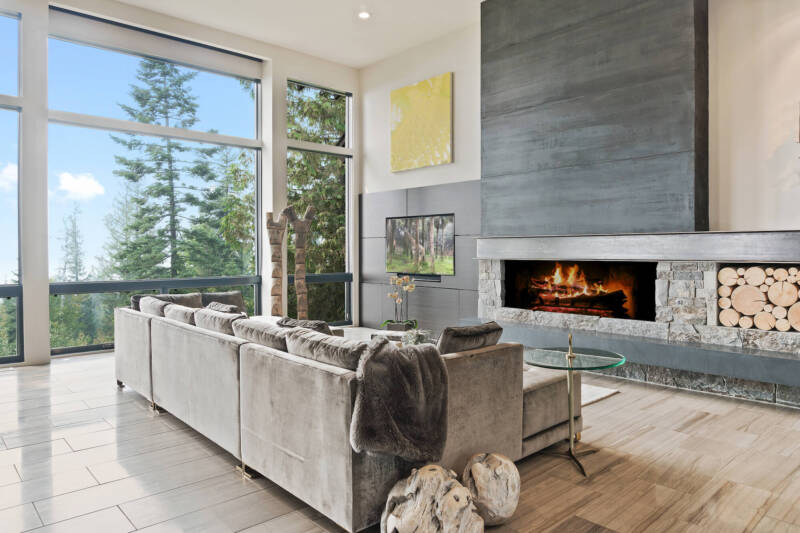
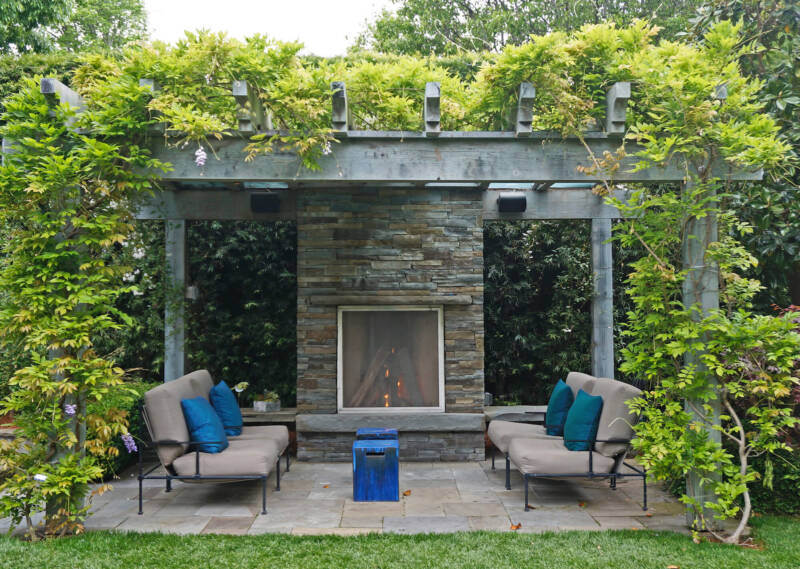
Stacked Stone Fireplace Examples
Need inspiration for your own stacked stone fireplace design? These four examples are a great place to start:
1. Vaulted Living Room

2. Rustic Cabin
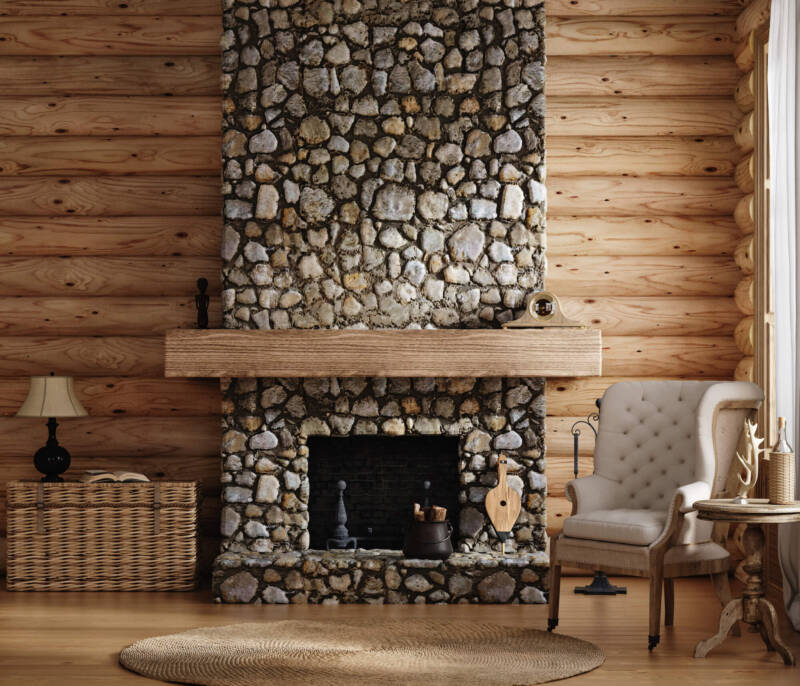
3. Modern Seating Area
4. Backyard Patio
Fireplace Renovations: Wood vs. Pellet vs. Gas
Is it time to give your existing stone (or brick) fireplace a makeover? If you’re ready to change up the look of your hearth, but you don’t have the budget for a complete revamp using real materials, then faux panels could be your answer. Not only are they easier on your wallet, but you’ll also have the freedom to choose from a wide range of different styles (with fire rated designs available for added safety) — making it possible to achieve the exact aesthetic you want. Plus, installation is simple enough that you can DIY and save even more on labor costs.
The same can be said if you’re transitioning from one type of heating system to another. Whether you’re adding a new wood, pellet or gas stove to your space, you can more affordably change the look and feel of the existing framework with faux panels.
Ready to start planning your next DIY project? Order samples of Texture Plus faux wall panels, or contact one of our design specialists for help with your project.